
Rhosneigr beach guide: four beaches, dog rules and parking
Traeth Crigyll, Traeth Llydan, Cymyran and Cable Bay: which Rhosneigr beach suits which day, plus dog rules, parking and tides.
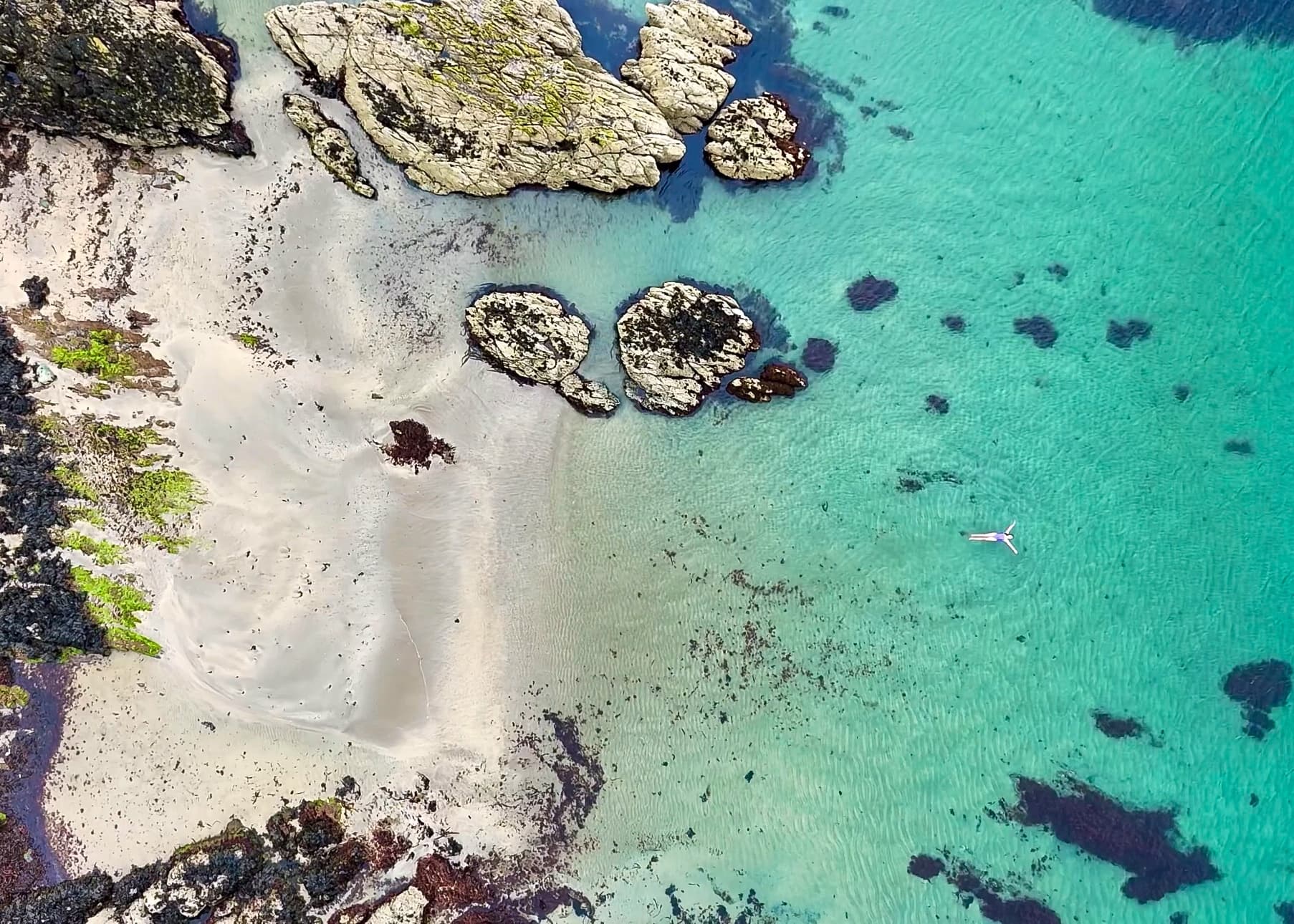
About one in four bookings at our Rhosneigr homes comes with a pet, so the dogs have clearly done their research.
Grab a brew; this is about a five-minute read.
Rhosneigr beach is two beaches, not one: Traeth Crigyll north of the village and Traeth Llydan (Broad Beach) to the south, split by a rocky outcrop on the west coast of Anglesey. Add Traeth Cymyran further north and Cable Bay 1.5 miles south, and you have four sandy beaches to choose from.
Rhosneigr does beaches properly, and unlike a lot of UK seaside resorts, it does dogs properly too: none of the four has a seasonal dog ban.
Rhosneigr beaches at a glance
Each Rhosneigr beach suits a different kind of day. Traeth Crigyll is for watersports and jet-spotting, Traeth Llydan for families and space, Cymyran for long empty walks and Cable Bay for calm water. All four are sandy, and all four welcome dogs all year.
| Beach | Where | Best for | Dogs |
|---|---|---|---|
| Traeth Crigyll | North side of the village | Windsurfing, kites, jet-spotting | All year |
| Traeth Llydan (Broad Beach) | South side, by the Oyster Catcher | Families, quieter days, rock pools | All year |
| Traeth Cymyran | North of the Crigyll estuary | Space, dunes, watching the jets | All year |
| Porth Trecastell (Cable Bay) | 1.5 miles south | Sheltered swimming, paddleboarding | All year |
Where is Rhosneigr beach?
Rhosneigr beach is on the west coast of Anglesey, right on the edge of the village. Traeth Crigyll runs along the north side of the village centre and Traeth Llydan starts at the south end, through the dunes. Rhosneigr has its own railway station, a request stop on the North Wales Coast Line, so you can arrive by train.
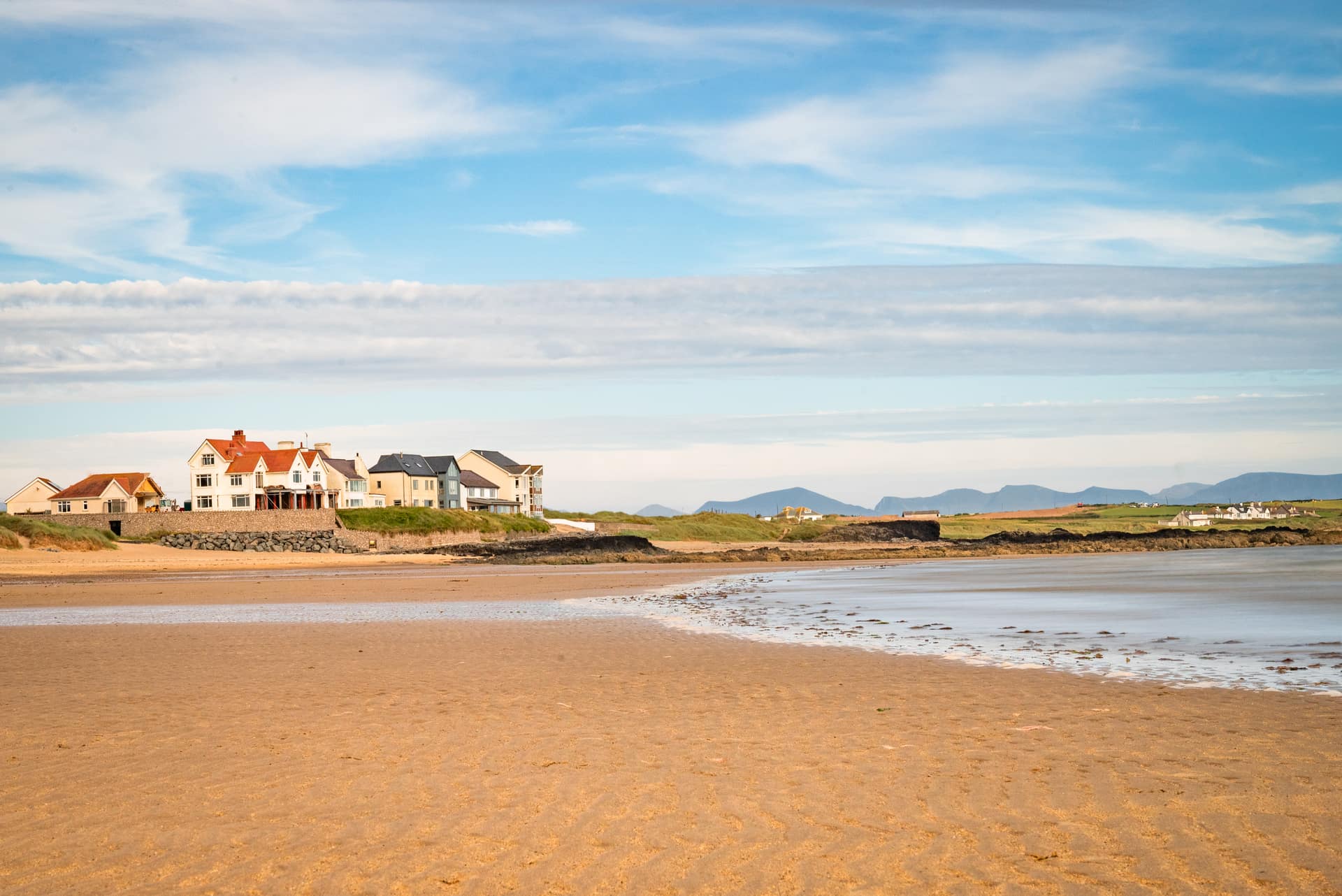
Traeth Crigyll (north beach)
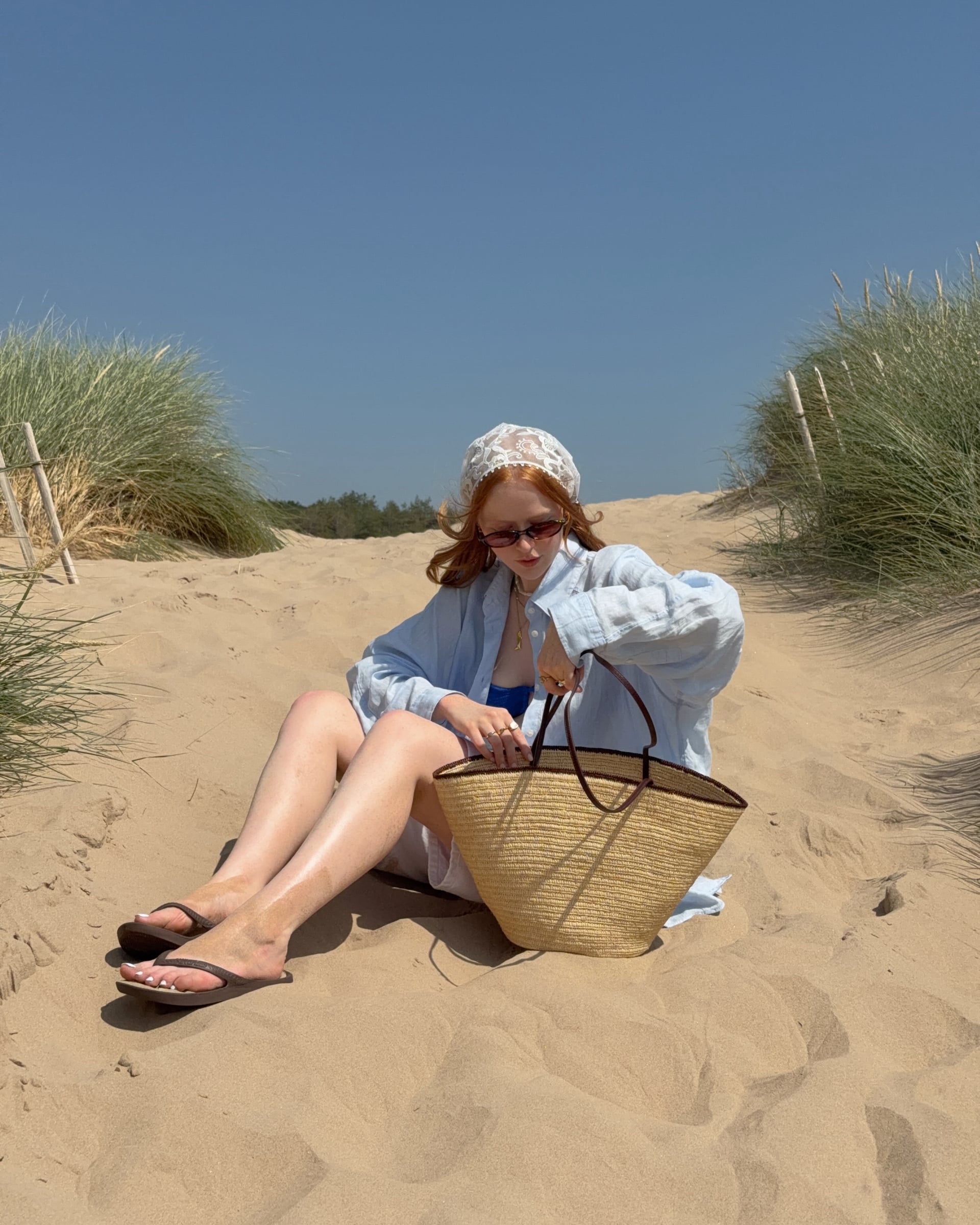
Traeth Crigyll is the main Rhosneigr beach: a wide stretch of golden sand along the north and west edge of the village, at the mouth of the River Crigyll. Families, dog walkers and windsurfers all share it, and at low tide the sand seems to stretch on forever.
Sandcastles and kite-flying are the main events, along with watching the training jets take off and land at RAF Valley across the estuary. You walk straight onto the sand from the village streets and slipways.
Traeth Llydan (Broad Beach)
Traeth Llydan is the quieter Rhosneigr beach, a mile-long crescent of sand south of the village. Tall dunes back it, and it's a little more sheltered than Traeth Crigyll. Even in August you can usually find a patch of sand to call your own.
Come for long walks, paddling, surfing and the rock pools at the southern headland. The Oyster Catcher sits right behind the beach, which suits anyone pairing a dune walk with a dog-friendly pint. Walk in through the dunes from the village, or park at the Oyster Catcher.
Two more beaches within 1.5 miles
Traeth Cymyran
Traeth Cymyran runs north from the mouth of the River Crigyll to the tidal strait that separates Anglesey from Holy Island. Expect wide open dunes, plenty of sand and a sense of being properly away from things.
Cymyran is the closest beach to the RAF Valley airfield, so it's the best spot in the area for watching the jets up close. Getting there means a longer walk from the Rhosneigr car parks, which suits families with older children who don't mind carrying the bucket and spade.
Porth Trecastell (Cable Bay)
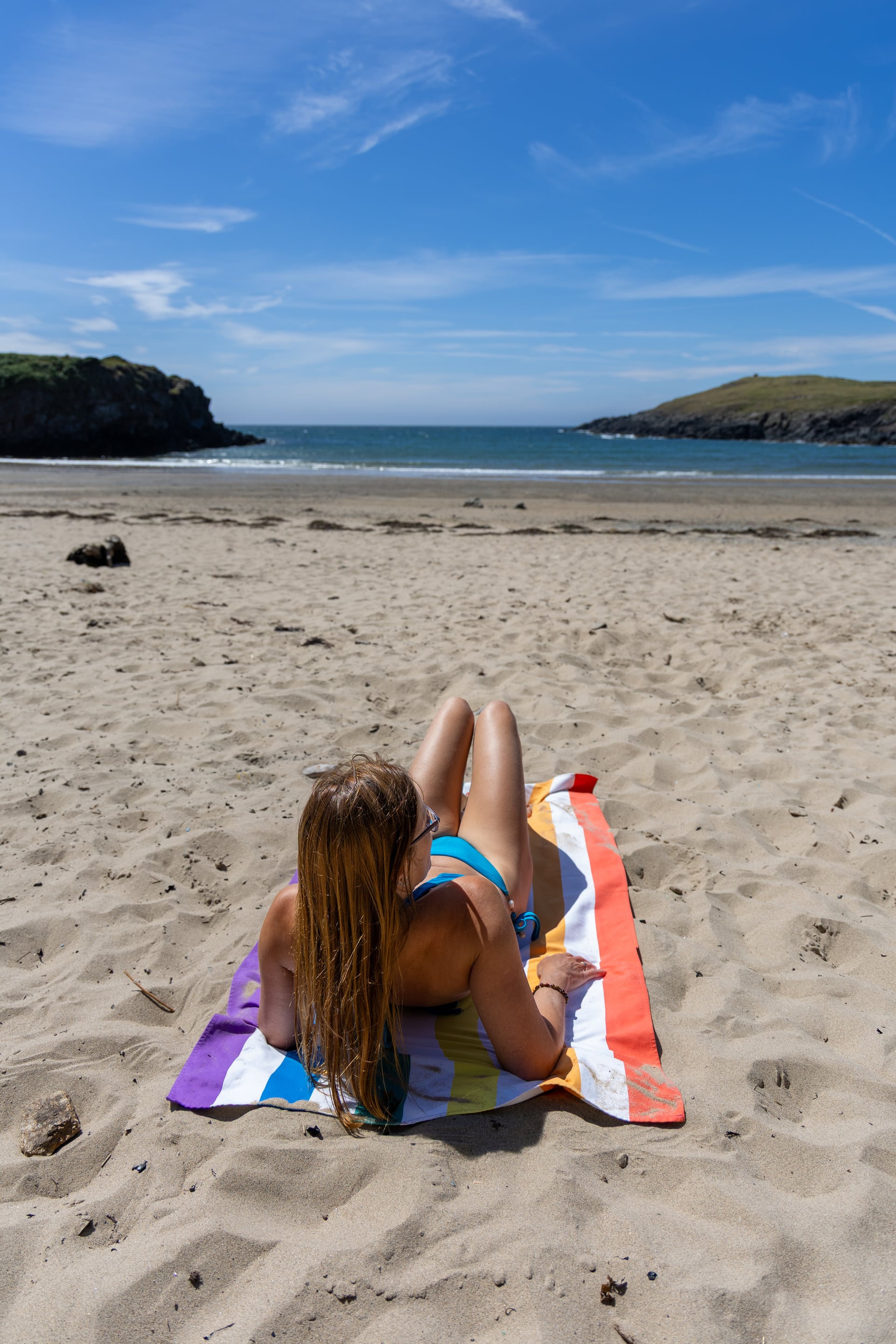
Porth Trecastell, better known as Cable Bay, is a sandy cove 1.5 miles south of Rhosneigr, tucked between two rocky headlands. Enclosed on three sides, the cove keeps out most of the coastal wind, and the water is calmer than on the open Rhosneigr beaches. The English name comes from the 1902 telegraph cables that once ran from here to Ireland.
Cable Bay is the pick for swimming, paddleboarding and kayaking. Further out there's a rolling swell for bodyboarding, and rock pools appear either side of the cove at low tide. A 5-10 minute walk up the northern headland brings you to Barclodiad y Gawres, a Neolithic burial chamber.
A pay-and-display car park sits directly behind the dunes. There are no public toilets or shops on site, though an ice cream van usually turns up in summer, so pack a picnic and bring water. A freshwater stream runs across the sand into the sea, and dogs and children both treat it as the main event.
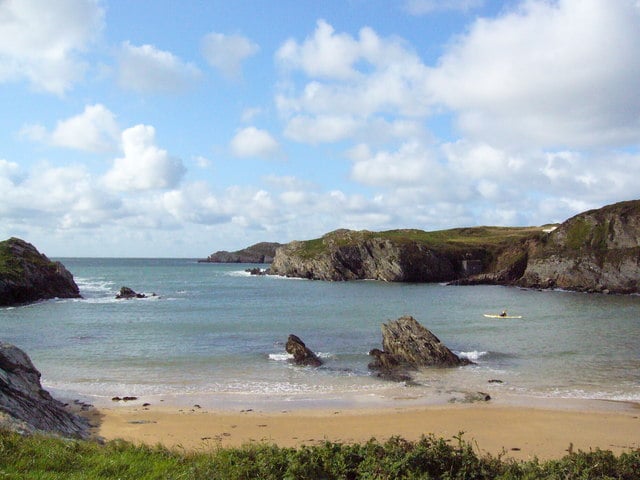
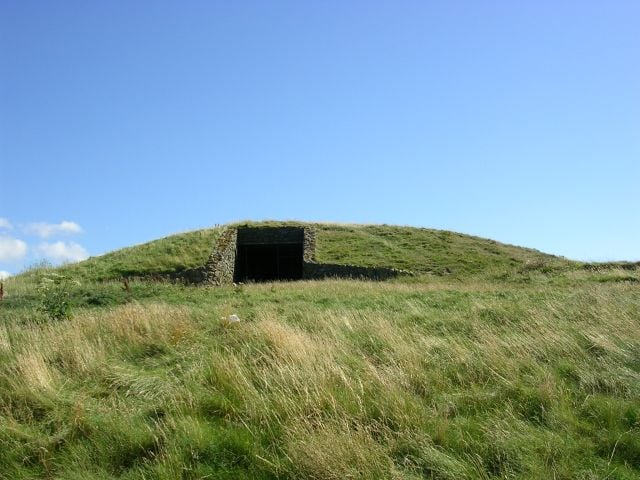
Porth Trecastell (Cable Bay) Image © Copyright Lynne Kirton
Where to stay near Rhosneigr beach
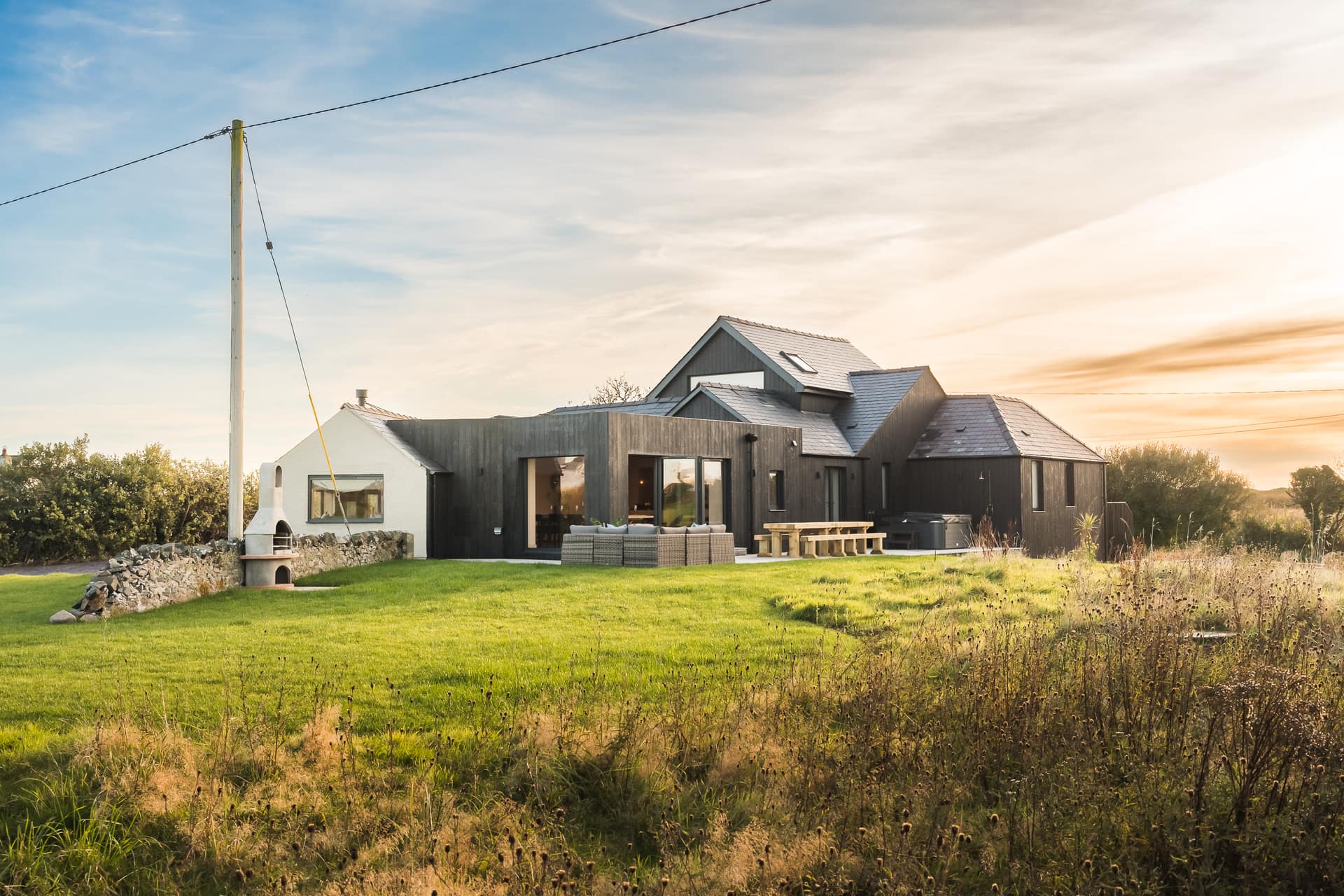
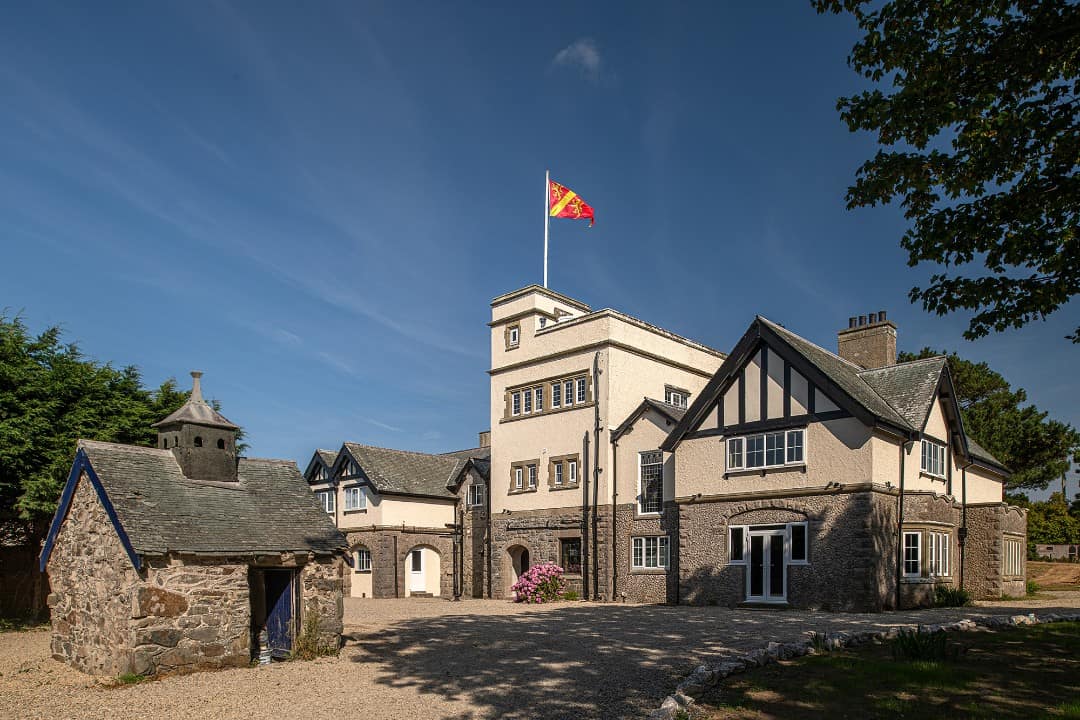
Our homes in and around the village range from Y Cwtch Cottage for two up to Rhosneigr Hall, which sleeps 22 across 11 bedrooms. Fern Lodge sleeps 16 in seven bedrooms, and Du Cabana sleeps 14 and is 0.4 miles from the Oyster Catcher.
Wherever you end up on the sand, you'll want somewhere big enough to dry the dog.
See all our Rhosneigr holiday cottages.
Frequently Asked Questions
Contact us
We're here to help
Whether you prefer to call or message, our team is ready to answer your questions and help you plan the perfect stay.


